Stories from Bharat x Visafir: Why Indian Visas Get Rejected & How AI + Human Experts Are Changing the Game
Millions of Indians dream of travelling abroad every year, but for many, the journey ends at the visa counter.
Rejected applications, non‑refundable fees, long waiting periods, and confusing documentation turn holidays into heartbreak.
In a powerful episode of Stories from Bharat on Curly Tales, host Kamiya Jani travelled to Delhi to meet Parvesh Dhull, founder of Visafir, an AI + human‑enabled visa assistance platform that is dedicated solely to solving this problem for Indian travellers.
This blog covers:
- What Stories from Bharat and Kamiya Jani stand for
- The harsh truth about visa rejections for Indians
- The biggest fears and pain points travellers feel
- How Visafir’s AI + human model is changing the visa experience
- Practical visa tips and FAQs for Indian travellers
About Stories from Bharat & Kamiya Jani
Stories from Bharat is a flagship show from Curly Tales, India’s leading digital platform for food, travel and lifestyle stories. Hosted by Kamiya Jani, the series travels across India to spotlight founders, professionals and everyday citizens who are solving real‑world problems with innovative ideas.
Kamiya, an ex‑TV journalist turned digital entrepreneur, founded Curly Tales to help Indians discover new places, experiences and stories. In Stories from Bharat, she brings this storytelling lens to people like Parvesh Dhull, whose work quietly impacts millions of Indian travellers.
In this special Delhi episode, Kamiya visits the Visafir office, walks through walls filled with travel quotes, meets country‑specific visa experts, and sits down with Parvesh to decode one core question:
“What are the visa rejection reasons for Indians, and what can we do differently?”
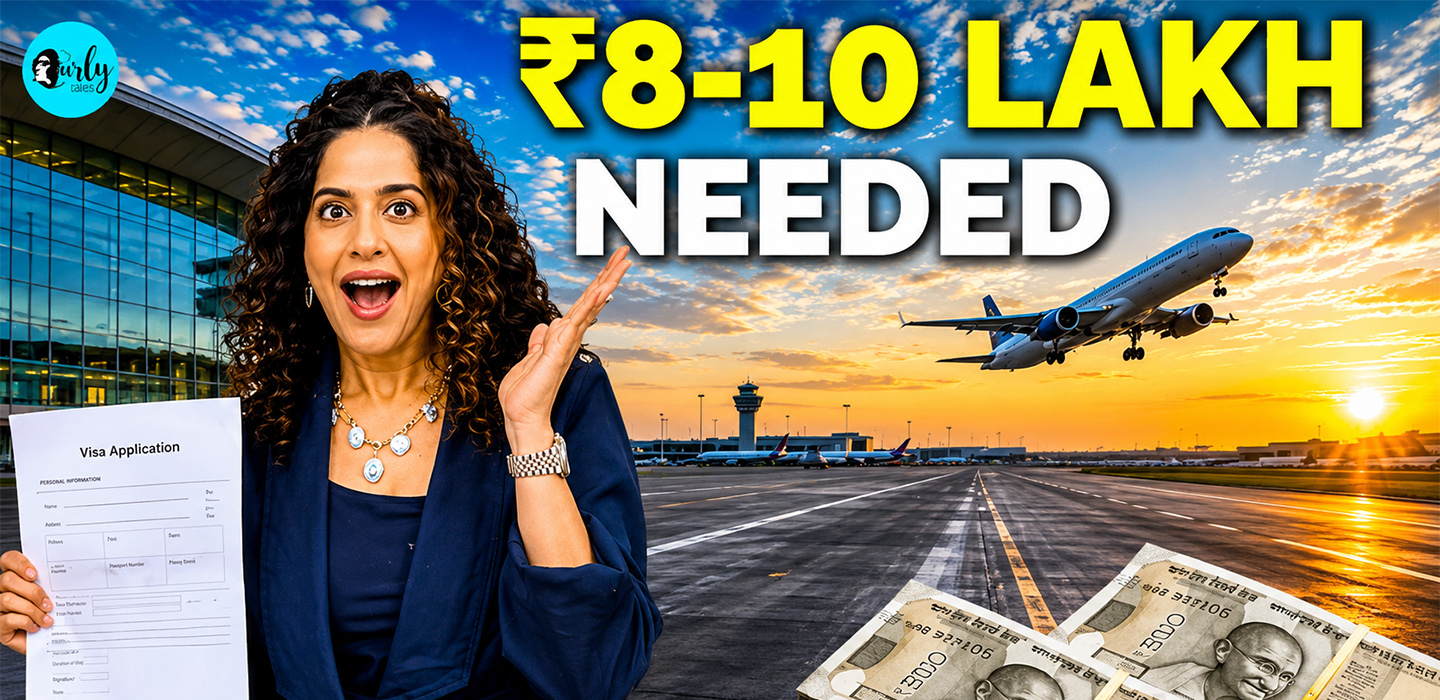
The Harsh Reality: Visa Rejection Is Costing Indians Crores Every Year
From your interview, a clear picture emerges:
- Every year, Indians lose over ₹100 crores due to visa rejections, purely in non‑refundable embassy fees.
- US visa rejection rate for Indians is around 60–61%, meaning roughly 60 out of every 100 applicants are turned away.
- Schengen visas: last year alone, 10–12 lakh Indian applications were rejected, with France rejecting 5–6 lakh by itself.
- Australia sees around 40% rejection rate for Indian tourist visas.
For many families, this isn’t just a number:
- A rejected visa can mean missing a once‑in‑a‑lifetime family holiday.
- A groom stuck in paperwork may almost miss his own wedding, like the Dubai case Parvesh shared, where Visafir had to escalate and secure approval overnight.
- Savings built over years vanish in non‑refundable fees.
No wonder Parvesh calls “fear of visa rejection” the single biggest barrier stopping Indians from planning international trips.
Fears & Pain Points Indian Travellers Face (From the Episode)
From the conversation between Kamiya and Parvesh, you can clearly see what Indian travellers are scared of.
1. “Will my visa get rejected… again?”
- People who’ve faced one rejection often never reapply, even though reapplication is absolutely possible.
- Big countries, US, Schengen, Canada, Australia, feel “risky”, so many travellers keep postponing or avoid them entirely.
2. “How much money should I show in my bank?”
One of the most asked questions:
“How much money should be in my bank account so that my visa is never rejected?”
Mr. Parvesh’s answer is nuanced:
- For Europe, you should have around ₹8–10 lakhs in running savings, not a lump sum deposited just before applying.
- For Singapore, aim for at least ₹1 lakh in savings.
- But more importantly: ITR (Income Tax Return) matters more than raw bank balance.
3. “I have money, but no ITR, is that a problem?”
Yes. For major destinations:
- ITR is mandatory.
- Bank balance alone doesn’t prove your financial history.
- Embassies want to see 3 years of income history to trust that you’ll return.
4. “My birthplace is in UP/Punjab/Haryana, will that affect my visa?”
Parvesh shares a candid reality:
- Certain countries and consulates (for example, Hong Kong) are stricter with passports showing place of birth or issue in
- Uttar Pradesh, Punjab, or Haryana.
- This increases rejection likelihood and may lead to more scrutiny or appeals.
5. “Will my social media affect my US visa?”
Yes. The US now mandates social media handles on the DS‑160 form:
- Consular officers review what kind of content you post and share.
- Your online behaviour contributes to their perception of your intent and mindset.
- It’s another layer in assessing whether you’re likely to overstay.
6. “Thailand stopped visa-on-arrival for Indians, what does that mean?”
Due to concerns around Indian tourists overstaying:
- Thailand has suspended visa‑on‑arrival for Indians, pushing them towards pre‑approved visas from India.
- This adds one more step and increases reliance on proper documentation.
All of this adds up to a simple emotional truth: Indians are excited to travel, but scared of being rejected.
The Scale of Indian Travel – And Why Visa Is the Weak Link
Visafir’s research in your interview highlights strong growth:
- Currently, around 20–25 million Indians travel internationally every year.
- By 2030, this is expected to cross 30 million travellers annually.
- Most business travellers still come from Tier 1 cities.
- But the real “ghumakkads”, passionate leisure travellers, are from Tier 2 and Tier 3 cities, who now travel abroad in big numbers.
Flights and hotels have matured:
- Dozens of apps, price comparison tools, loyalty programs.
Visa, however, remains the most confusing, least digitised part of the journey:
- Few dedicated platforms.
- Heavy paperwork.
- Complex, changing rules per country.
- High stakes if you make mistakes.
That’s exactly where Visafir positions itself.
What Is Visafir? An AI‑Powered, Human‑Verified Visa Assistance Platform
From the episode and external coverage, Visafir is:
- A technology‑led visa facilitation company based in New Delhi, focused solely on visa documentation and preparation for Indian travellers.
- It supports applications across 120+ destinations, including the US, UK, Schengen region, UAE, Singapore, China, Japan and more.
- It runs an AI + Human “double‑lock” model: AI‑assisted form filling and document validation, followed by expert human review before submission.
- Its operations are backed by a team of visa specialists with experience across international visa processing.
From the interview with Kamiya in Delhi:
- Visafir has separate divisions per region, Europe, US & Canada, Middle East, etc.
- Offices in Mumbai, Delhi, and Ahmedabad serve travellers from across India.
- In the last one year alone, Visafir has helped around 3 million (30 lakh) Indian travellers secure visas.
Visafir doesn’t replace embassies, it helps travellers reach embassy standards with their documentation.
Visafir’s USPs in the Visa Industry (Backed by the Episode)
1. AI Auto‑Fill + Human Visa Experts
On Visafir:
- You select your destination.
- You upload your passport (front and back) and other basic documents.
- AI auto‑fills visa forms according to that country’s requirements.
- If you’re confused at any step, country‑specific human experts step in.
External reports on Visafir’s platform describe features like:
- AI‑assisted form filling
- Intelligent document validation
- Destination‑specific checklists
- Digital onboarding and appointment scheduling
- Human verification of every application before submission
This combination ensures:
- Fewer manual errors
- Faster processing
- A second layer of protection against missing or weak documents
2. Scale Without Losing Quality
Mr. Parvesh explains that with AI:
- Visafir can process 500 visas vs. 100 manually in the same time frame.
- Document collection, the most time‑consuming part, is streamlined.
At the same time:
- Every application still receives human review, ensuring that technology doesn’t replace judgment; it enhances it.
3. Focus Only on Visas, Not Flights/Hotels
Unlike typical travel agents:
- Visafir doesn’t position itself as a “do everything” travel agency.
- It is dedicated only to visas, the toughest part of international travel.
- This focus allows deeper expertise, stronger embassy relationships, and better process design.
As Mr. Parvesh says:
“We chose the visa segment because it’s the toughest part of travel, and your journey begins with the visa. That’s why we named it Visafir.”
4. Honest About Guarantees
Visafir’s terms clearly state that it is a facilitator only and does not guarantee visa approval.
Parvesh reinforces this on camera:
- No one, not even the embassy can guarantee a visa.
- If any agent promises a guaranteed visa, it’s a red flag.
- Visafir focuses on documentation quality, not false assurances.
5. Social Mission: “Beti Ko Ghumaao”
Visafir’s ethos goes beyond business:
- Initiative “Beti ko ghumaao”, girls under 18 years get free service charges on tourist and business visas.
- Free service for military personnel and special campaigns for seniors and retired armed forces around Independence Day.
External coverage highlights that Visafir has recently run an Independence Day initiative waiving fees for girls below 18, senior citizens 60+ and retired armed forces personnel, aligning closely with what Parvesh shared.
Their message:
“The government says ‘Save the daughter, educate the daughter.’ We say, ‘Let the daughter travel too.’”
FAQ:
Q1. How much money should be in my bank so my visa is not rejected?
There’s no magic number that guarantees approval, but as a rule of thumb:
- Europe (Schengen): Aim for ₹8–10 lakhs in stable, running savings.
- Singapore: At least ₹1 lakh in savings.
- More important than balance: 3 years of ITR showing consistent income.
Q2. If my visa gets rejected, can I apply again?
Yes, you absolutely can reapply:
- Analyse the likely reason for rejection (weak documentation, financials, travel history, profile).
- Strengthen your file, especially ITR, savings, and supporting documents.
- Avoid repeating the same mistakes; consider expert help for the next attempt.
Q3. Why do US visas get rejected so often for Indians?
From Mr. Parvesh’s insights:
- US visas are interview‑based, confidence and clarity at the interview matter.
- The DS‑160 form is reviewed before you walk in; they already know your financials.
- They now review social media handles, travel history, and documentation to judge your likelihood of returning.
Q4. Which visas are hardest for Indians to get?
The toughest segments are:
- US
- Schengen countries (especially France)
- Canada
- Australia
These countries deeply scrutinise financial history, travel history, documentation, and profile risk.
Q5. Can travel agents guarantee a visa?
No. If anyone:
- Guarantees a visa
- Promises 99% or 100% approval
- Asks large extra fees claiming they can “influence” decisions
…it’s a scam. Even embassies don’t guarantee visas. The only honest approach is: prepare complete, strong documentation, and follow embassy rules.
Q6. How is Visafir different from a typical visa agent?
- Uses AI to auto‑fill forms and verify documents before submission.
- Has country‑specific expert teams rather than general travel staff.
- Provides transparent guidance without false guarantees.
- Runs social initiatives like “Beti ko ghumaao” and fee waivers for selected groups.
Visafir for Indian Travellers from Tier 1, Tier 2 & Tier 3 Cities
From your interview:
- Visafir serves travellers from Mumbai, Delhi, Ahmedabad and beyond.
- Business travellers largely come from Tier 1 cities.
- Leisure travellers, families, honeymooners, “ghumakkads”, increasingly come from Tier 2 and Tier 3 cities.
Combined with its AI‑enabled digital onboarding and remote documentation support, Visafir is well positioned for:
- Delhi‑NCR visa assistance
- Mumbai visa processing support
- Ahmedabad and Gujarat travellers
- Tier 2 & Tier 3 city travellers who may not have access to high‑quality visa counselling locally.
Final CTA: Make Your Next Visa Application “Done Right in One Go”
If this episode of Stories from Bharat left you thinking seriously about visa rejection, it’s time to act differently for your next trip.
With Visafir, Indian travellers can:
- Start their visa application online in minutes
- Use AI auto‑fill to reduce errors in forms
- Get expert human review for complex profiles and high‑risk destinations
- Access clear guidance on ITR, savings, documentation, and travel history
- Travel with more confidence, and less fear of rejection
Visit visafir.com to begin your application and make your next visa journey faster, easier and more accurate.
Be the first to comment.